epoxy flooring contractor handle moisture testing
Many property owners planning to install epoxy flooring often ask does an epoxy flooring contractor handle moisture testing, and the answer is usually yes. Moisture testing is one of the most important steps in the preparation process because epoxy coatings cannot properly bond to concrete that contains excessive moisture. If moisture is ignored, it can cause bubbling, peeling, discoloration, and complete coating failure. A professional epoxy flooring contractor understands these risks and typically includes moisture evaluation as part of their standard pre-installation procedure.
Before beginning the installation, an Epoxy flooring contractor inspects the condition of the concrete surface to determine whether moisture could be an issue. Concrete naturally absorbs and releases moisture over time, but if the moisture level is too high, epoxy cannot adhere correctly. When people ask does an epoxy flooring contractor handle moisture testing, it is because they want to ensure the floor will last for many years without problems. Moisture testing helps the contractor choose the right products and methods for the project.
One of the most common moisture testing methods an epoxy flooring contractor uses is a calcium chloride test. This test measures moisture vapor emission rates from the concrete. If the readings are too high, the contractor knows that a moisture mitigation system is necessary before applying epoxy. This step ensures that moisture does not push the epoxy off the surface after installation. Another test is the relative humidity (RH) probe test, where sensors are placed inside drilled holes in the concrete to measure internal moisture levels. This method provides accurate readings and helps determine the overall condition of the slab.
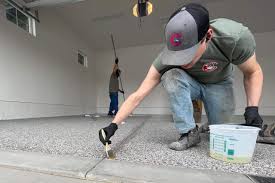
Does an epoxy flooring contractor handle moisture testing?
In addition to formal tests, an experienced epoxy flooring contractor may visually inspect for moisture signs such as dark spots, efflorescence, or existing coating failures. These indicators help them understand how the concrete has reacted to moisture in the past. When clients ask does an epoxy flooring contractor handle moisture testing, they are often relieved to learn that skilled contractors know exactly what to look for and how to evaluate the situation thoroughly.
If moisture levels are found to be too high, a professional contractor will take corrective action. This may include applying a moisture barrier, using specialized primers designed to withstand high moisture levels, or recommending additional drying time for the slab. Moisture mitigation is a crucial part of ensuring that the epoxy floor will bond properly and remain durable under various conditions. A qualified epoxy flooring contractor will clearly explain these steps and why they are necessary.
Moisture testing also helps determine which type of epoxy system should be used. Some epoxy products are more tolerant of moisture than others, and a contractor may choose a specific formulation based on the test results. This customization ensures the flooring performs well even in environments such as basements, warehouses, or commercial kitchens where moisture levels fluctuate.
In conclusion, when asking does an epoxy flooring contractor handle moisture testing, the answer is yes—reputable contractors always evaluate moisture as part of the preparation process. By conducting proper testing, identifying risks, and applying moisture-mitigation solutions, an epoxy flooring contractor ensures the flooring lasts longer, performs better, and remains visually appealing for years to come.